Workplace Report
Understand emotional-intelligence competencies in the context of professional effectiveness, workplace interaction, and development.

Emotional intelligence is not simply about getting a score. Project SPICES™ combines established emotional-intelligence assessment instruments, guided interpretation, and applied development to help you explore how emotional patterns influence relationships, decisions, leadership, and everyday functioning.
It affects how we respond to pressure, interpret other people, handle disagreement, make decisions, communicate, adapt to change and manage relationships.
That makes emotional intelligence relevant to individuals, professionals, students, teams, leaders and organizations— but the application should look different depending on the person and context.
Notice emotional patterns, triggers, perceptions and responses.
Understand how emotional functioning affects connection and conflict.
Examine how emotion interacts with judgment and problem solving.
Explore flexibility, coping and functioning under pressure.
Project SPICES™ offers emotional-intelligence assessment options for different developmental contexts. The right choice depends on the individual, the purpose, and the type of insight needed.
Understand emotional-intelligence competencies in the context of professional effectiveness, workplace interaction, and development.
Examine emotional intelligence through a leadership lens, including influence, relationships, decision-making, and development priorities.
Compare self-perception with feedback from selected raters to explore similarities, differences, and opportunities for growth.
Apply emotional-intelligence insight within student development, educational programs, and related learning contexts.
Examine aggregated emotional-intelligence patterns across a group or developmental cohort to inform collective learning.
Combine assessment insight with interpretation, reflection, and an appropriate developmental coaching engagement.
Emotional intelligence is not one skill. The model looks at a set of emotional and social competencies that interact with one another.
The instrument provides data. The developmental work begins with better questions.
What is this pattern affecting?
Where does it help me?
Where may it be limiting me?
What does it look like under pressure?
What might I practice differently?
Project SPICES™ places emotional-intelligence assessment within a broader human-development context rather than treating one score as a complete explanation of a person. Interpretation, reflection, and practical application help turn assessment information into meaningful developmental work.
Emotional intelligence is relevant across personal, relational, leadership, team, and organizational contexts. The most meaningful application begins by identifying the questions you want to explore and the outcomes you hope to support.

Explore emotional patterns, self-awareness, interpersonal relationships, decision-making, stress responses, and personal effectiveness.

Create shared language around emotional awareness, communication, collaboration, conflict, interpersonal expectations, and team effectiveness.

Connect emotional intelligence insights to influence, decision-making, stress management, relationships, leadership behavior, and professional growth.

Apply emotional intelligence insights within broader leadership development, organizational culture, change initiatives, communication, and team effectiveness.
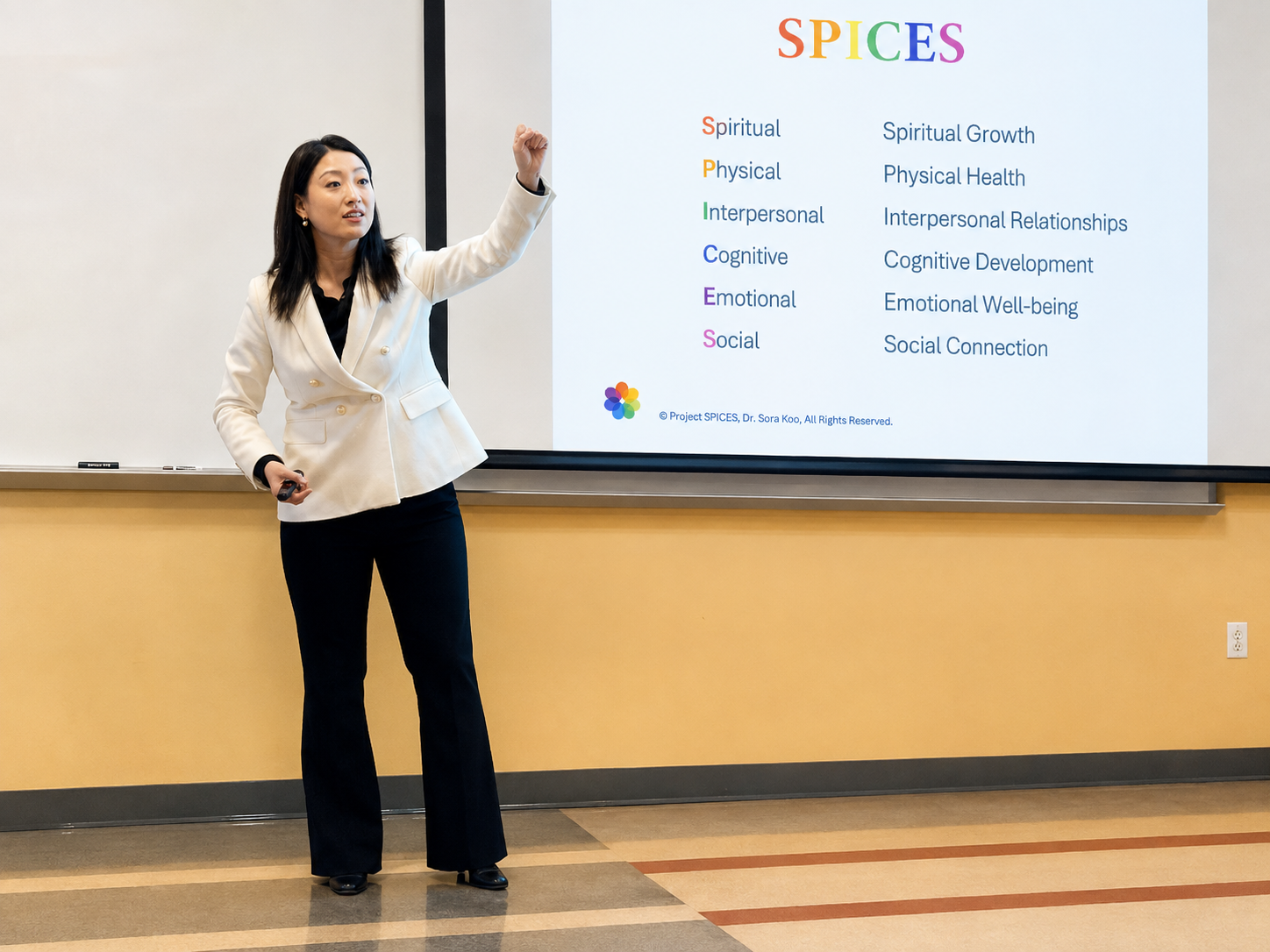
A sophisticated assessment is only as useful as the conversation built around it.
Dr. Sarai Koo brings extensive work
across human development, leadership,
executive coaching, assessment,
education, relationships, and
organizational systems to the
interpretation process.
That broader perspective allows
emotional-intelligence findings
to be discussed within the context
of lived experience, relationships,
professional responsibilities,
and organizational conditions—
rather than as isolated scores.

Project SPICES™ also works with leadership, change, influence, team and interpersonal assessments when another lens would better serve the developmental question.
The goal is not to administer more assessments. The goal is to select useful tools for the context and translate information into meaningful development.
Tell us what you are trying to understand or improve. We can help determine whether EQ-i 2.0®, EQ 360®, another assessment, or a broader developmental pathway makes sense for your situation.
EQ-i 2.0® is an emotional-intelligence assessment that measures emotional and social competencies across a structured model of scales and subscales.
EQ 360® adds feedback from selected raters so an individual's self-perception can be considered alongside how others experience them.
No. Emotional-intelligence development can be relevant for individuals, professionals, students, teams, leaders, and organizations. The application should be tailored to the context.
Project SPICES™ emphasizes interpretation and developmental conversation rather than treating the assessment report as the end of the process. Specific packages, debriefing arrangements, and coaching options can be discussed before enrollment.
Use emotional-intelligence assessment as a starting point for deeper awareness, development and more intentional action.